
TLDR: HVAC equipment financing lets contractors buy service vans, commercial HVAC units, diagnostic tools, and fleet vehicles without paying cash upfront. This guide covers how equipment loans work, what they cost, how fast you can get funded, and how to use financing to scale your HVAC operation without draining your working capital.
HVAC equipment financing is a business loan secured by the equipment itself — vans, rooftop units, refrigerant recovery machines, and diagnostic tools — that lets HVAC contractors acquire revenue-generating assets now and pay for them over 24 to 60 months while keeping cash reserves intact for payroll, materials, and operations.
HVAC Equipment Financing: Fund Your Fleet and Tools Without Draining Cash Flow
HVAC contractors live and die by equipment. Your service vans are your mobile storefronts. Your diagnostic tools determine whether you can take on complex commercial jobs or limit yourself to basic residential calls. Your lift equipment and commercial HVAC units are the difference between a $4,000 residential replacement and a $40,000 commercial installation. The problem is that the equipment that generates the most revenue also costs the most money upfront.
Equipment financing solves that equation. You acquire the asset, you put it to work, it generates revenue, and you pay it off over time from the income it produces. That is the foundation of how smart HVAC contractors scale without gambling their operating cash on a single equipment purchase.
If you’re also managing seasonal cash flow gaps or need capital beyond equipment, read our full guide to short-term loans for HVAC contractors — it covers MCAs, lines of credit, and working capital options side by side.
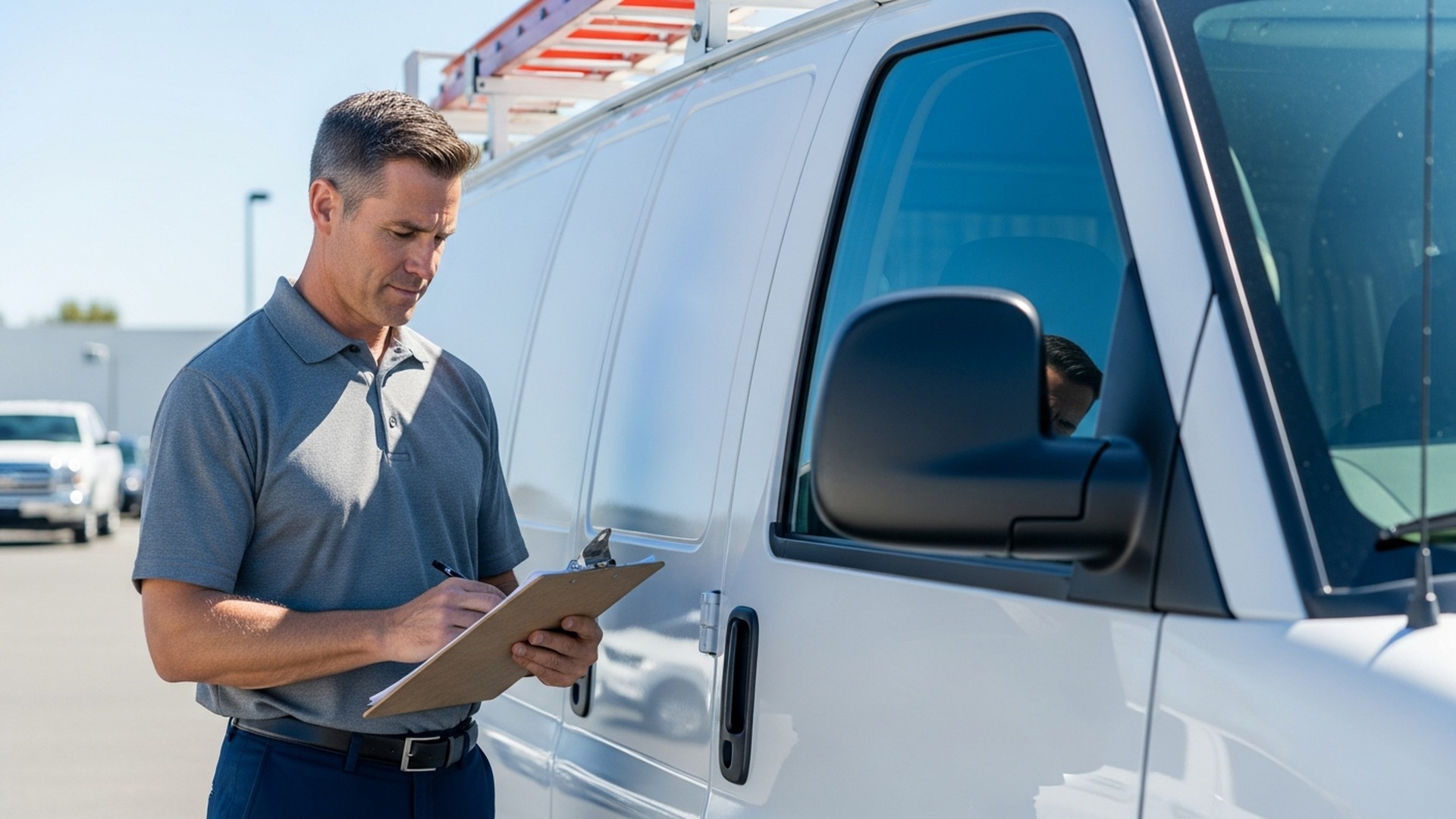
What HVAC Equipment Financing Covers
Service Vans and Fleet Vehicles
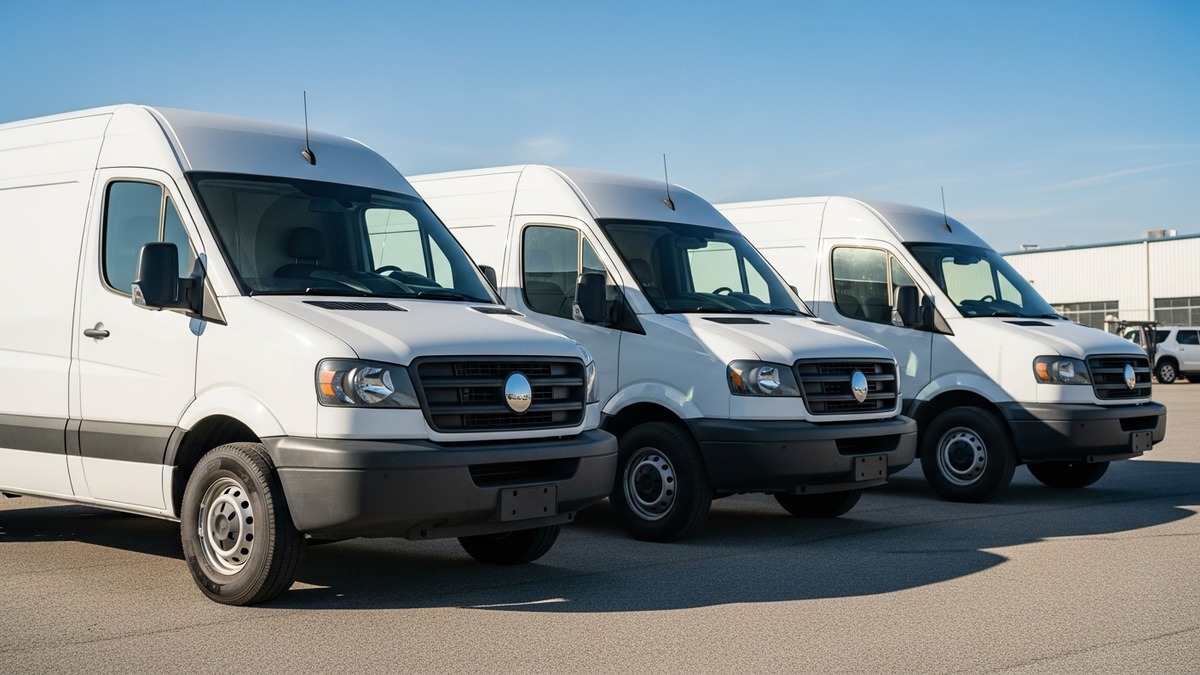
A single cargo van for an HVAC technician runs $38,000 to $55,000 fully outfitted with racking, storage, and signage. A fleet of three vans represents $115,000 to $165,000 in capital before you put a single technician on the road. Equipment financing spreads that cost over 36 to 60 months, turning a six-figure cash hit into a manageable monthly payment structured around your revenue cycles.
The van generates revenue from day one. A productive HVAC technician running service calls in a properly stocked van averages $150,000 to $250,000 in annual billing. The math works clearly: finance the van, put a tech in it, generate revenue that covers the payment multiple times over.
Commercial HVAC Units and Systems
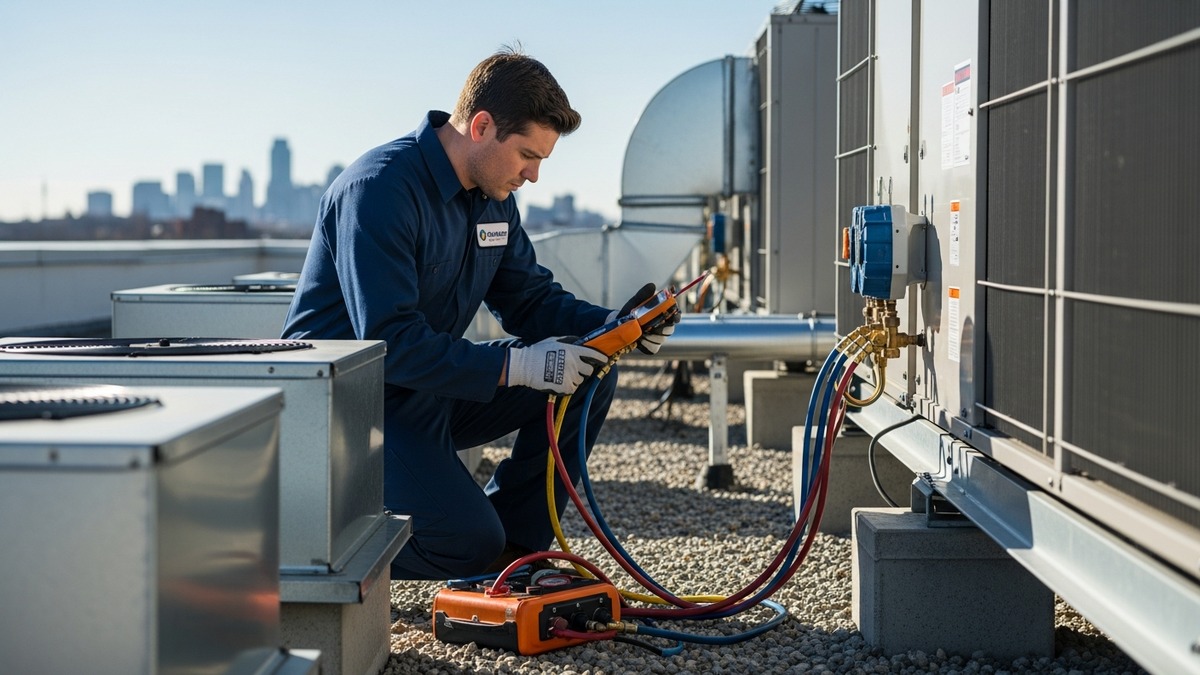
Commercial HVAC equipment is where the real margin lives for HVAC contractors moving beyond residential-only work. A commercial rooftop package unit runs $7,000 to $15,000 for equipment alone, with installation labor adding $3,000 to $8,000. Chiller systems for larger commercial buildings run $15,000 to $200,000 depending on capacity. If you want to bid commercial work, you need access to this equipment — either purchasing it for jobs or stocking commonly used units for faster turnaround.
Equipment financing lets you buy commercial units upfront for active jobs, recoup the cost from the client invoice, and use the financing period to preserve cash between job completion and client payment.
Diagnostic and Specialty Tools
Modern HVAC work requires modern diagnostic equipment. Refrigerant recovery machines ($800 to $2,500 each), combustion analyzers ($1,500 to $3,000), HVAC gauges and manifold sets, duct leakage testers, thermal imaging cameras — these tools expand what your technicians can diagnose and bill for. A thermal imaging camera alone, at $2,000 to $5,000, often pays for itself on the first job where it identifies a leaking duct that a visual inspection would miss.
Equipment financing for tools typically works on 12 to 36 month terms at slightly higher rates than vehicle financing, but the ROI calculation is straightforward: if the tool generates billable work it would otherwise miss, it pays for itself.
How HVAC Equipment Financing Works
Loan vs. Lease: Which Structure Fits Your Business
| Structure | Ownership | Tax Treatment | End of Term | Best For |
|---|---|---|---|---|
| Equipment Loan | You own it from day one | Section 179 deduction available | No residual — fully paid off | Long-term assets you’ll keep 5+ years |
| Equipment Lease (Finance Lease) | Lender owns during term | Payments may be fully deductible | Purchase option at residual value | Technology that depreciates fast |
| Operating Lease | Lender owns throughout | Payments fully deductible as operating expense | Return or upgrade | Fleet vehicles you want to refresh every 3 years |
For most HVAC contractors, an equipment loan makes the most sense for vehicles and long-life commercial equipment. You build equity in the asset, you can claim Section 179 depreciation in the tax year of purchase (up to $1,160,000 for 2026), and you own it free and clear at the end of the term. Talk to your accountant about what structure produces the best tax outcome for your specific situation.
Approval Requirements for Equipment Financing
Equipment financing has lighter requirements than unsecured business loans because the equipment itself serves as collateral. The lender can repossess and liquidate the asset if you default, which reduces their risk and allows more flexible approval criteria.
Typical requirements from alternative lenders for HVAC equipment financing:
- Time in business: 12 months minimum for equipment loans; some lenders approve at 6 months for strong revenue
- Monthly revenue: $10,000 to $15,000 minimum; higher amounts qualify for larger financing
- Credit score: 600+ for most programs; some lenders work with scores below 600 if revenue is strong
- Equipment age: Most lenders finance equipment up to 10 years old; newer is better for rates
- Down payment: 0% to 20% depending on credit profile and equipment value
Application documents are minimal: a completed application, three months of bank statements, and an equipment quote or invoice. No business plan, no collateral appraisals beyond the equipment itself, no personal tax returns in most cases. Approval decisions come in 24 to 48 hours, with funding in 2 to 5 business days.
Equipment Financing Costs: What HVAC Contractors Actually Pay
Rate Ranges by Credit Profile
Equipment loan interest rates for HVAC contractors currently run:
- Excellent credit (720+): 5% to 9% APR on 24 to 60 month terms
- Good credit (660–719): 9% to 18% APR
- Fair credit (600–659): 15% to 28% APR
- Below 600: Alternative lenders may approve at higher rates; worth evaluating if the equipment ROI is clear
On a $40,000 service van at 12% APR over 48 months, your monthly payment runs approximately $1,053. A technician in that van billing $18,000 per month at 50% gross margin generates $9,000 before overhead. The payment is covered many times over. That is why equipment financing works: the payment is a fraction of the revenue the asset produces.
Section 179 and Bonus Depreciation
The IRS Section 179 deduction lets you deduct the full purchase price of qualifying equipment in the year you place it in service rather than depreciating it over its useful life. For 2026, the deduction limit is $1,160,000 with a phase-out beginning at $2,890,000 in total equipment purchases.
My read is that Section 179 is one of the most underused tools HVAC contractors have. You finance a $50,000 equipment purchase, deduct $50,000 in the current tax year, and the tax savings partially offset your financing cost. Run this by your accountant every time you’re evaluating a major equipment purchase. The effective cost of financed equipment is lower than the nominal rate when you factor in the deduction.
Equipment Financing vs. Other Funding Options
Equipment financing is not always the right tool. Here is how it stacks up against the alternatives for common HVAC contractor needs:
| Need | Best Fit | Why |
|---|---|---|
| Service van purchase | Equipment loan | Low rate, asset as collateral, Section 179 eligible |
| Emergency repair on existing equipment | Business line of credit or MCA | Can’t finance a broken part; need fast cash for repair bills |
| Payroll during slow season | Merchant cash advance or working capital line | Equipment financing requires an asset purchase; operational costs need unsecured capital |
| Commercial HVAC unit for active job | Equipment financing or short-term loan | Finance the unit if keeping it; short-term loan if billing client for full cost |
| Fleet expansion (3+ vehicles) | Fleet financing or equipment loan | Dedicated fleet programs offer better rates on multiple units |
For broader coverage of your financing options beyond equipment, our guide on short-term loans for HVAC contractors covers merchant cash advances, working capital lines, and how to stack financing products strategically.
How to Apply for HVAC Equipment Financing
Step 1: Get an Equipment Quote
Lenders finance specific equipment purchases. Get a written quote from your vendor — for a van, a dealer invoice; for commercial HVAC units, a supplier quote. The quote establishes the amount you’re financing and confirms the equipment’s value to the lender.
Step 2: Prepare Your Bank Statements
Three months of business bank statements showing consistent deposits is the core document for alternative equipment lenders. Your statements demonstrate revenue, cash flow, and banking habits. Avoid NSF events in the 90 days before applying — they signal cash management problems to underwriters.
Step 3: Apply Through a Contractor-Focused Lender
General business lenders often don’t understand trades businesses. A lender who specializes in contractor financing understands seasonal revenue patterns and the operational context of an HVAC business. At Contractor Loaners, applications take under 10 minutes, decisions come back within 24 hours, and funding arrives in 2 to 5 business days.
Step 4: Review the Terms
Before signing, confirm: the total amount financed, interest rate or factor rate, monthly payment, term length, prepayment terms (can you pay it off early without penalty?), and any origination fees. Calculate the total cost of the loan — principal plus total interest — and compare it against the revenue the equipment will generate over the same period.
Frequently Asked Questions: HVAC Equipment Financing
Can I finance used HVAC equipment?
Yes. Most equipment lenders finance used equipment up to 10 years old. Rates may be slightly higher than for new equipment, and some lenders require an equipment inspection or appraisal for high-value used units. For used service vans, standard commercial vehicle financing programs typically apply without additional requirements.
What is the minimum credit score for HVAC equipment financing?
Most alternative equipment lenders work with credit scores of 600 and above. Some programs approve contractors with scores below 600 if monthly revenue is strong ($20,000+) and the equipment value clearly supports the loan. A lower credit score typically means a higher interest rate, not an automatic denial.
How fast can I get funded?
Alternative equipment lenders fund in 2 to 5 business days after approval. Approval decisions come in 24 to 48 hours for most applications. Traditional bank equipment loans take 2 to 6 weeks for approval and another 1 to 2 weeks for funding. If you need the equipment within the week, use a contractor-focused lender.
Do I need to put money down on an equipment loan?
Many equipment financing programs require 0% down for well-qualified borrowers. Contractors with lower credit scores may face a 10% to 20% down payment requirement. A down payment reduces your monthly payment and overall interest cost, so if you have cash available, putting something down often makes financial sense.
Can I finance multiple pieces of equipment on one loan?
Yes. Many lenders offer blanket equipment financing that covers multiple assets under one loan agreement. This simplifies administration and often gets better terms than separate loans on individual pieces. Tell your lender upfront that you’re financing multiple items — vans, tools, and units together — and ask about consolidated programs.